Parcel Sorting Systems Manufacturer & Factory

Intelligent, High-Speed Automation Engineering & Custom Warehouse Integration Solutions for Global Supply Chains

Shenzhen JK Logistics Co., Ltd.: Pioneering Intralogistics Automation

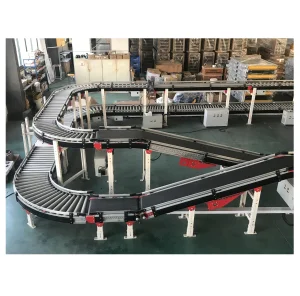
Shenzhen JK Logistics Co., Ltd. is an industry-leading, professional Warehouse Conveyor Systems Manufacturer specializing in the design, engineering, and manufacturing of material handling systems, high-speed sorting technologies, and complete logistics automation pipelines. Strategically based in the technology center of Shenzhen, China, we operate at the intersection of mechanical excellence and advanced digital control platforms. Our systems are engineered to improve operational efficiency, drastically optimize throughput, and reduce physical processing friction across diverse supply chains.

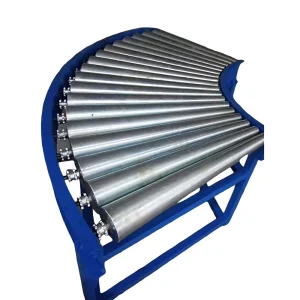
Leveraging decades of specialized engineering experience, JK Logistics designs turnkey architectures covering automated loop sorting, linear cross-belt sortation, in-line DWS (Dimensioning, Weighing, Scanning) systems, and multi-directional roller networks. Our industrial equipment is deployed in intensive, high-throughput environments globally, including major e-commerce fulfillment hubs, national postal sortation grids, third-party logistics (3PL) terminals, cold-chain operations, and smart manufacturing facilities.

We work closely with global system integrators and logistics directors to translate raw footprint challenges into optimized physical workflows. Our expert engineering division analyzes client floor plans, packaging variation matrices, throughput targets, and system-level communication schemas (WCS, WMS, ERP APIs) to construct solutions that are scalable, reliable, and highly responsive. With continuous R&D investments, we ensure that every system operates with high energy efficiency, maximum uptime, and precision handling mechanics.

99.9%
Sorting Accuracy
10k+
PPH Throughput Cap

Industrial Trajectories & Market Dynamics (2025–2030)

The global logistics space is undergoing a seismic shift. Rapid delivery expectations, localized warehouse models, and labor fluctuations have elevated parcel sorting systems from secondary auxiliary utilities to primary drivers of enterprise profitability. We identify four key trends defining modern intralogistics system procurement:

  • Deep Integration of Intelligent Sensing (AI & Machine Vision): Traditional barcode scanners are giving way to high-definition line-scan cameras and depth sensors capable of performing OCR, damaged-box detection, and volumetric measurement simultaneously on high-speed conveyors.
  • Modular Loop & Grid Scalability: Modern facilities cannot afford extended system shutdowns for expansion. Logistics managers favor modular linear cross-belt systems and standardized loop units that can expand with simple plug-and-play mechanical additions.
  • De-carbonization & Green Operations: Energy-efficient drive technologies, such as linear synchronous motors (LSM) and intelligent smart sleep-mode systems, reduce energy consumption by up to 45% during low-flow sorting periods.
  • Dynamic Flow Allocation: Predictive software routines adjust belt speed, carrier angles, and singulator pacing dynamically, responding in real-time to surges in package dimensions and volume profiles.

System-Level Architectural Configurations

How JK Logistics matches mechanical architectures with specific industrial throughput demands.

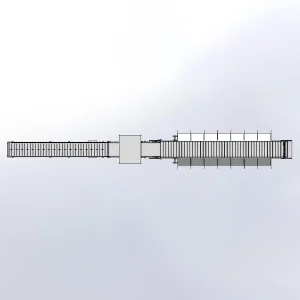
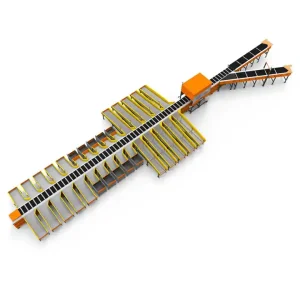
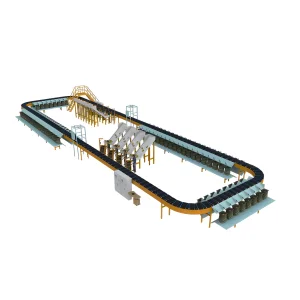
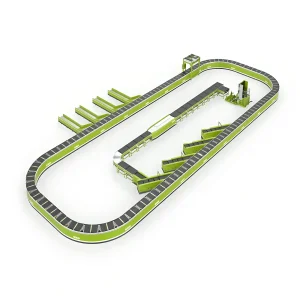
Loop Cross-Belt Sorter System

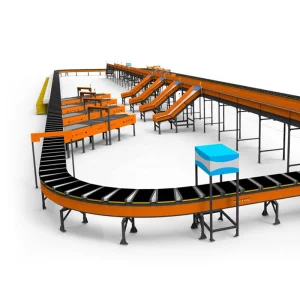
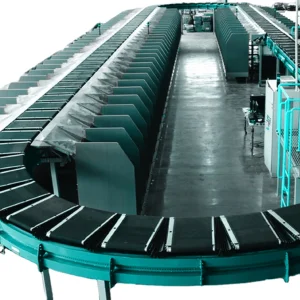
Designed for ultra-high-volume sorting matrices in postal centers and primary hub facilities. Utilizes an endless chain of carriage cars featuring motorized belt platforms that discharge parcels to left or right destination bins with exact speed matching.

Capacity: Up to 18,000 pph

Linear Sorter Pipelines

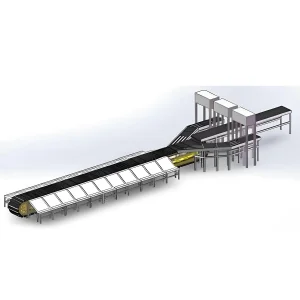
Optimized for linear layouts, narrow configurations, or mid-tier regional distribution channels. Offers a lower footprint cost and easier implementation path while retaining professional-grade speed metrics and carrier stability.

Capacity: Up to 8,000 pph

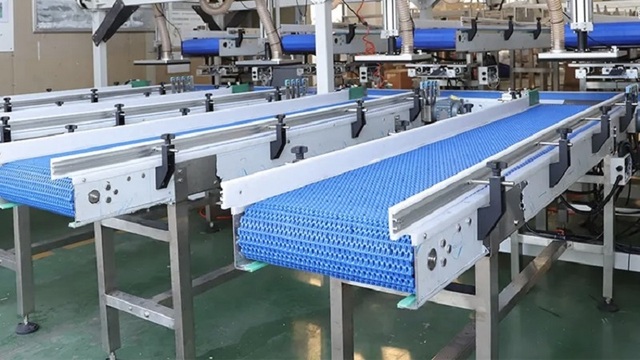
Narrow Belt & Diverter Units

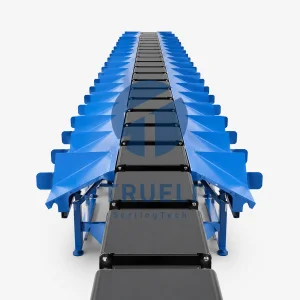
Ideal for medium-weight packaging, plastic totes, and mixed material streams. Standardized pop-up wheel diverters or sliding shoe mechanisms isolate and move objects safely without risking package damage.

Capacity: Up to 5,000 pph

Strategic Procurement: Evaluating TCO, Throughput, and Integration APIs

Purchasing an industrial-scale sorting pipeline requires analyzing key technical factors beyond initial capital expenditure. Procurement officers must evaluate:

  1. Carrier-to-Belt Matching Ratios: The synchronization accuracy between the incoming parcel feed conveyor and the main carrier belt. Poor timing causes misaligned placements and increased drop errors.
  2. Dynamic Weighing and Profiling (DWS) Latency: Ensuring that weight and 3D volumetric readings are captured within milliseconds at line speed to avoid creating processing bottlenecks.
  3. Integration Interfaces: Ensuring control software communicates smoothly with mainstream host systems like SAP, Oracle Logistics, and various local WMS variants via RESTful APIs, TCP/IP sockets, or OPC UA protocols.

Shenzhen JK Logistics Co., Ltd. addresses these challenges by developing tailored control software configurations that integrate with major third-party applications, giving warehouse operators full control over processing metrics and real-time operational status.

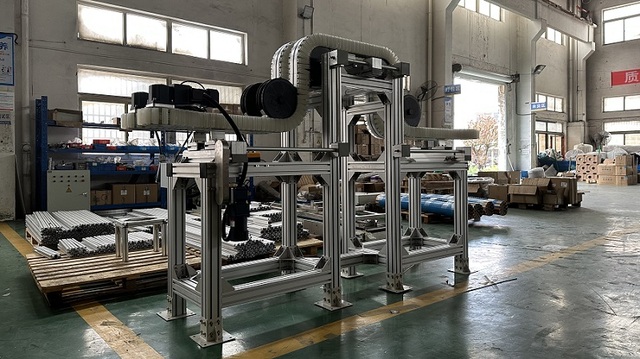
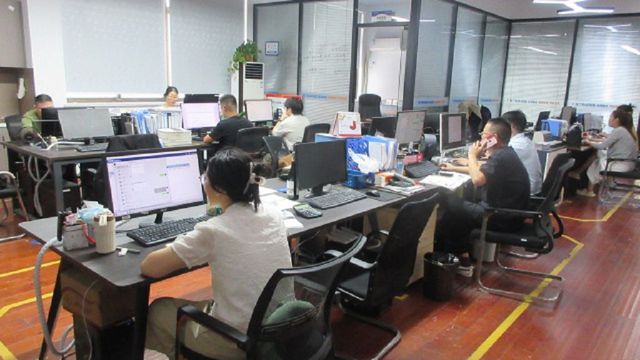
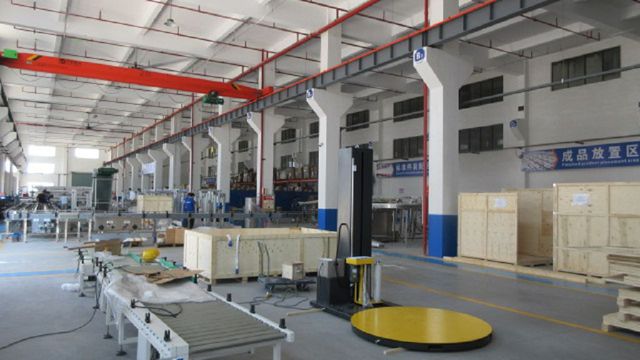
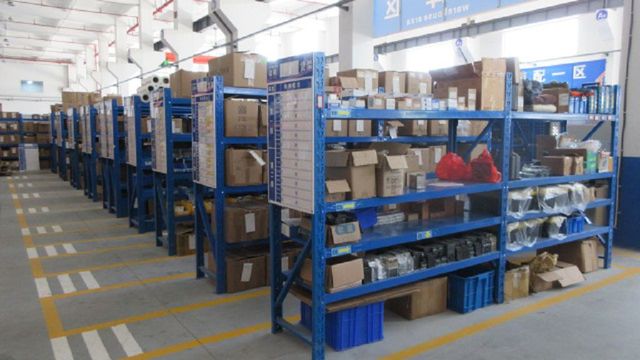
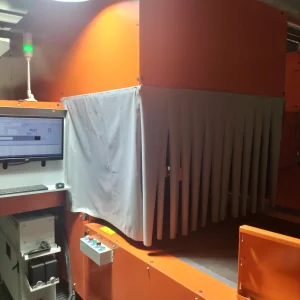
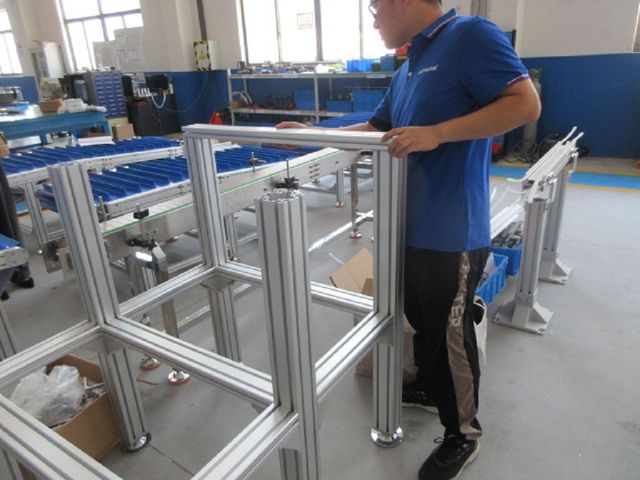
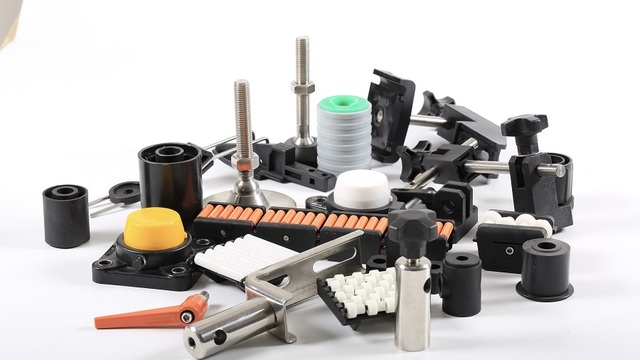
Advanced Manufacturing & Testing Facility

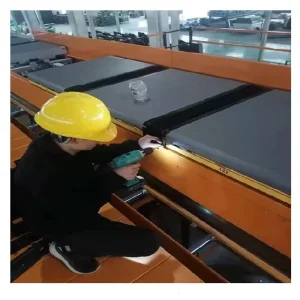
Inside the Shenzhen JK Logistics facility: Where precision assembly, advanced metallurgy, and strict quality control protocols ensure reliable performance.
Future Outlook: Technical Roadmap for Intelligent Sortation

As logistics technology evolves toward fully autonomous operations, our engineering pipeline targets several key areas for system design improvements:

Phase 1: Edge AI and Camera-Based Sorting

Integrating camera feeds with on-device computer vision models to detect parcel irregularities, label anomalies, and packing damage, which helps prevent sorting jams before they occur.

Phase 2: Predictive Mechanical Health Monitoring

Deploying specialized vibration and temperature sensors across key components, like motor shafts and drive pulleys, to flag potential mechanical failures before they cause unexpected downtime.

Phase 3: Hybrid AMR-Sorter Environments

Developing control systems that allow traditional fixed-conveyor cross-belt sorters to work seamlessly with autonomous mobile robots (AMRs), creating highly flexible routing options for shifting logistics volumes.

Global Regulatory Compliance & Regional Service Networks

Deploying automated logistics machinery in international markets requires complying with strict regional safety, design, and environmental standards. Shenzhen JK Logistics Co., Ltd. builds and certificates its product lines according to these safety benchmarks:

  • CE Mark (Europe): Meeting all relevant EU safety directives, machinery safety standards, and electromagnetic compatibility regulations.
  • UL & CSA Standards (North America): Sourcing UL-listed electrical panels, control units, and wiring structures to satisfy local safety requirements in the US and Canada.
  • OSHA Alignment: Building physical safety elements, like robust conveyor side guards, easily accessible emergency stops, and low-noise operational drives, to support workplace safety.

To support operations globally, we maintain a dedicated technical team alongside certified local system integration partners. This network handles initial installation, on-site testing, scheduled maintenance, and fast spare-parts dispatch across Europe, North America, South America, Asia, and the Middle East.

Expert Q&A: In-Depth Sorter Technology Insights

Addressing the technical, operational, and structural questions that logistics managers face when selecting sorting machinery.

Q1: What defines the speed capacity threshold for high-speed cross-belt sorting systems?
The processing speed is determined by several factors, including the maximum line speed of the conveyor, carrier layout distance, package length, and the performance of the entry induction systems. Standard systems operate at line speeds from 1.5 m/s to 2.5 m/s, yielding throughput rates between 8,000 and 18,000 packages per hour (pph), depending on parcel sizes and how effectively packages are fed onto the sorter.
Q2: How do integrated DWS systems improve data accuracy in parcel hubs?
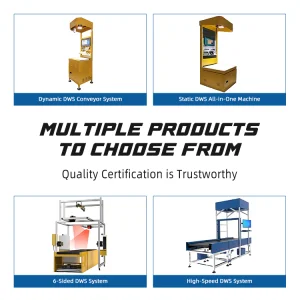
DWS systems integrate Dimensioning (using lasers or cameras), Weighing (via in-motion dynamic scales), and Scanning (using barcode readers or OCR software) into a single step. By processing all three measurements in-motion on the conveyor, the system updates warehouse databases immediately. This supports accurate freight pricing, load planning, and automated routing without slowing down package flow.
Q3: Can linear cross-belt sorters process fragile or irregularly shaped items?
Yes. Modern cross-belt systems use dynamic motor control on each individual carrier card. By matching the carrier's discharge speed with the parcel's speed, the system can gently roll or slide items into target chutes. This minimizes impact forces, allowing the system to handle delicate packaging, soft polybags, and uneven parcels safely.
Q4: How does Shenzhen JK Logistics handle system installation and on-site testing?
We provide a structured installation and commissioning process. Our engineers perform factory acceptance testing (FAT) before shipping components. Once on-site, we collaborate with local installation teams to assemble, align, and test the system with live parcel flows during site acceptance testing (SAT), ensuring it meets the required throughput and sorting accuracy before going live.
Q5: What are the regular maintenance needs of narrow-belt sorting conveyors?
Regular maintenance focuses on monitoring belt tension, checking the wear of diverter wheel components, cleaning scan lenses, and lubricating mechanical bearings. Our systems feature modular components that allow quick replacement of diverter and belt modules, reducing downtime for scheduled maintenance.
Q6: How do your control systems interface with existing WMS or ERP platforms?
We use flexible Warehouse Control System (WCS) middleware that interfaces with host WMS or ERP applications using industry-standard protocols, including TCP/IP sockets, REST APIs, or database connections. This ensures real-time tracking, flow reporting, and error handling are logged and visible on the customer's main software dashboard.
All Parcel Sorting Systems Products