Modern global logistics and warehousing ecosystems have transitioned from a phase of human-driven labor enhancement to total automation. The contemporary global supply chain faces critical challenges: persistent labor shortages, skyrocketing warehouse space rental rates, compressed order fulfillment times, and the relentless growth of omnichannel commerce. Multinational enterprises and small-to-medium enterprises (SMEs) alike are actively seeking to secure high-performance technology systems that minimize footprint while maximizing vertical density and horizontal sorting velocity.
In response to these industrial dynamics, procurement organizations analyze warehouse automation through several key performance metrics: system scalability, Mean Time Between Failures (MTBF), integration ease with existing Warehouse Management Systems (WMS) and Warehouse Execution Systems (WES), and regional regulatory compliance. The sourcing profile for picking systems focuses on modular designs. Equipment like the Heavy Duty Intelligent Automation Picking Warehouse Storage Automated AS/RS allows global businesses to scale their operations progressively, adding pallet bays or shuttle lanes without interrupting ongoing warehouse routines.
Operational safety is paramount. Sourcing directors favor systems engineered with anti-corrosive structural elements, especially when deployed in cold storage facilities or chemical environments. Standard compliance, such as CE and UL, along with structural robustness capable of handling dynamic loads up to 4000kg/layer, represents the benchmark for modern industrial procurement.
Furthermore, the demand for green, energy-saving systems has surged, driven by environmental mandates and corporate sustainability metrics. Enterprise logistics managers prioritize robots and palletizers with low power consumption profiles and regenerative braking systems. Implementing systems that use high-efficiency PLC architectures and low-power motors (such as 1 kW configurations) can reduce electricity bills by up to 35% compared to legacy hydraulic systems.
To establish a fully functional goods picking automation solution, a manufacturer must look beyond individual machines. The modern distribution center requires a cohesive union of robotic picking arms, autonomous vehicles, and real-time visualization frameworks. Designing macro solutions requires analyzing client operations, processing layouts, cycle times, and growth strategies.
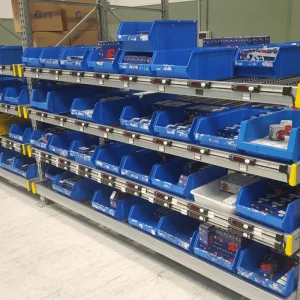
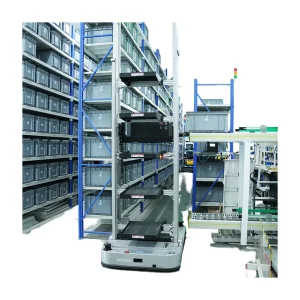
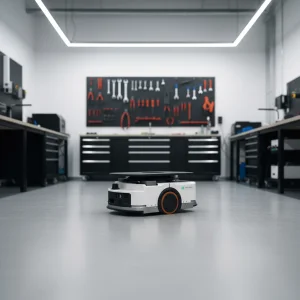
Integrating autonomous mobile robots (AGVs) with pick-to-light sorting systems. The AGV transports shelf units directly to ergonomic picking stations, reducing operator transit times and driving order picking accuracy above 99.9%.
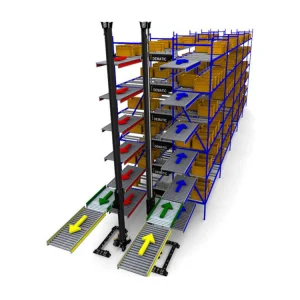
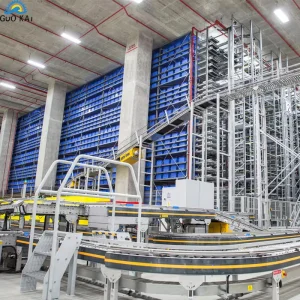
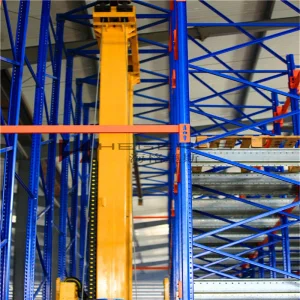
High-precision stacker cranes and custom racks built to handle payloads ranging from 1000kg to 4000kg. Optimized for cold chain operations, heavy manufacturing parts warehouses, and food distribution hubs.
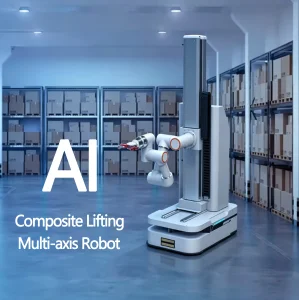
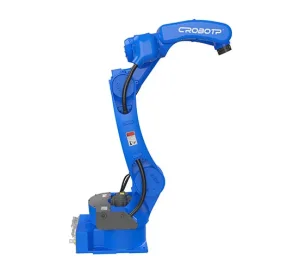
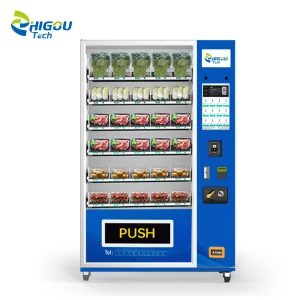
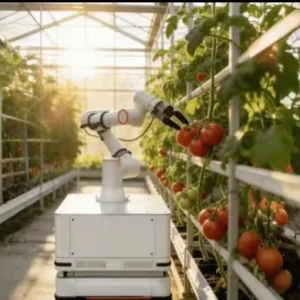
Utilizing composite multi-axis arms, parallel robotic mechanisms, and outdoor-rated AGVs with computer vision. Suitable for automated retail storefronts, agricultural fruit harvesting, and unmanned micro-fulfillment centers.
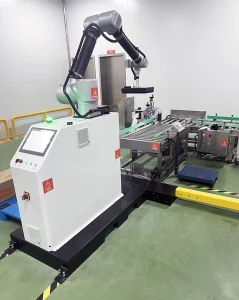
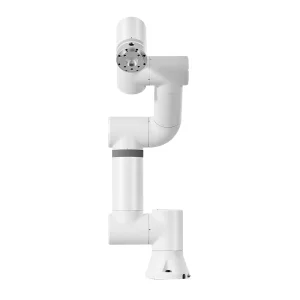
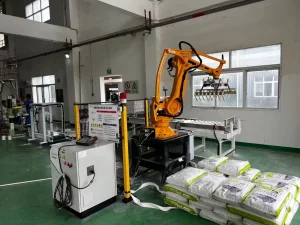
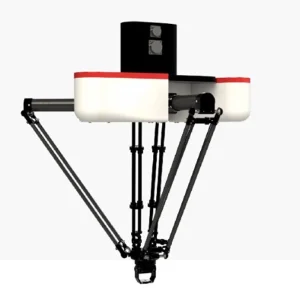
By coordinating these technologies, manufacturers can resolve throughput bottlenecks. For instance, the inclusion of a D5-800-P2 five-axis collaborative parallel robot allows for high-frequency pick-and-place cycles of lighter goods (up to 2kg), while heavy-duty palletizing robots handle outbound shipping preparation at the end of the line. Managing these distinct tasks with a central control system reduces idle time, smooths traffic flow, and cuts down on product damage during sorting.
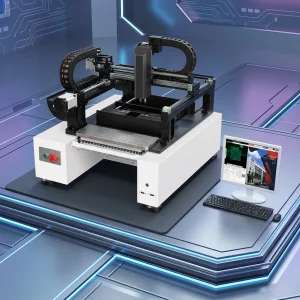
The technical evolution of warehousing robots relies on two main pillars: advanced computer vision and collaborative control. Legacy robotics relied on rigid programming with preset coordinate points. Today, integrating OpenCV frameworks and AI-powered multi-axis control allows picking robots to identify, analyze, and manipulate unsorted items in real time. Adaptive vision models enable robots to adjust their gripping force based on the item's physical characteristics, whether handling delicate retail packaging or heavy industrial components.
A typical vision-guided robotic workflow includes several main processing stages:
High-resolution cameras capture raw visual data, mapping product shapes and spatial positions.
OpenCV algorithms detect edges, orientations, and coordinates to calculate the optimal pick angle.
Multi-axis controllers plan collision-free movement profiles for the collaborative robotic arms.
Custom grippers place the item securely onto sorting bins or outgoing shipping pallets.
Looking forward, the industry is moving toward greater decentralization. Instead of relying entirely on centralized servers, edge-computing nodes embedded directly in the machinery will process vision and navigation data locally. This approach minimizes latency, enhances obstacle avoidance response times for AGVs, and ensures uninterrupted operation even during wireless network dropouts. In addition, the integration of 5G communications enables fleet controllers to manage hundreds of autonomous mobile robots across large facility footprints.
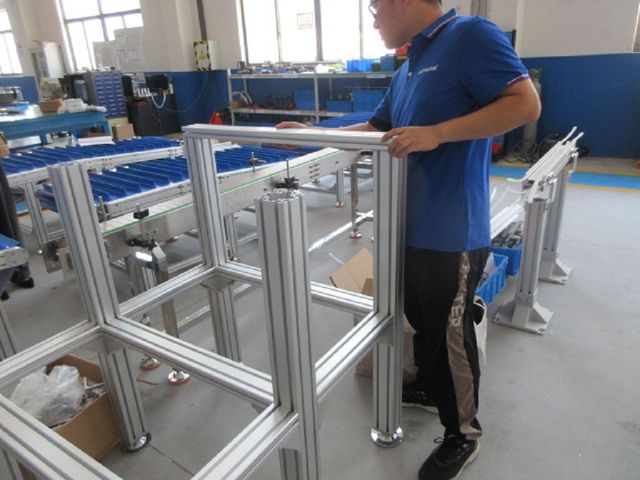
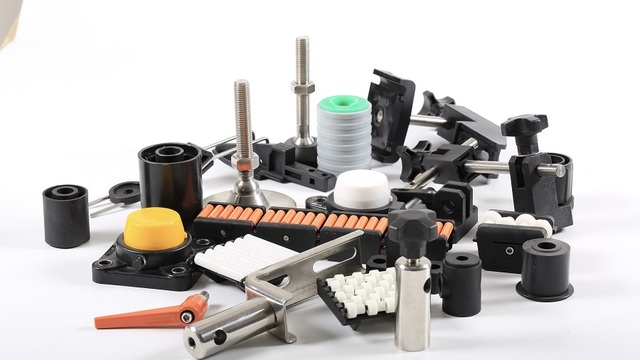
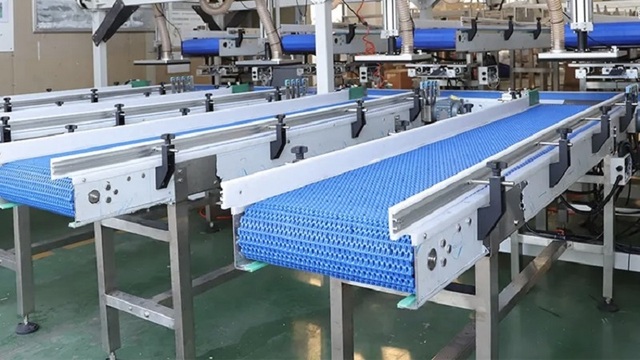
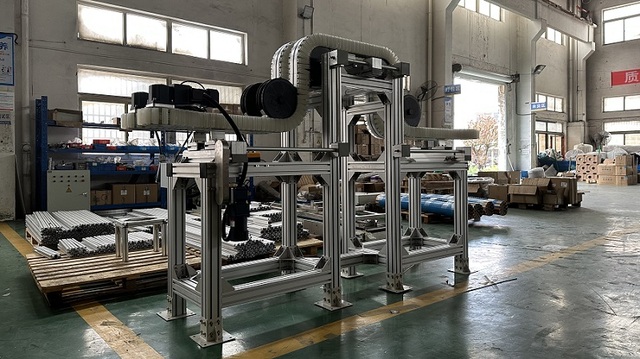
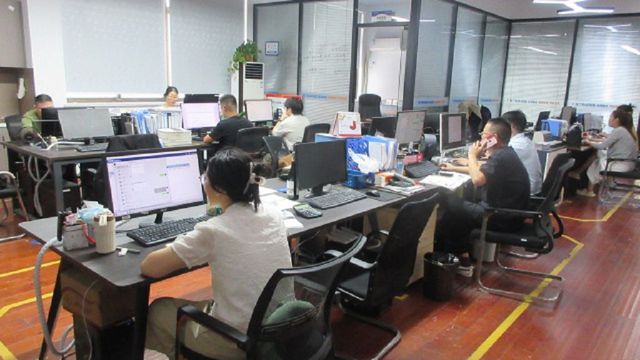
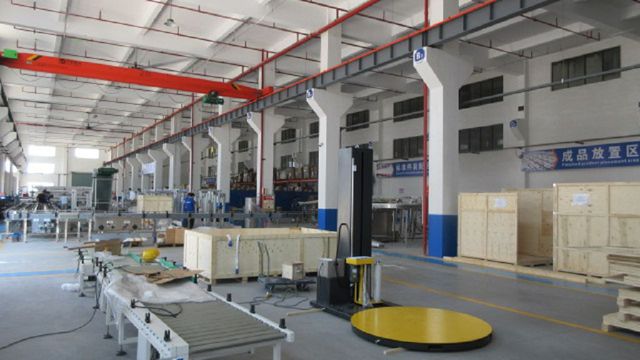
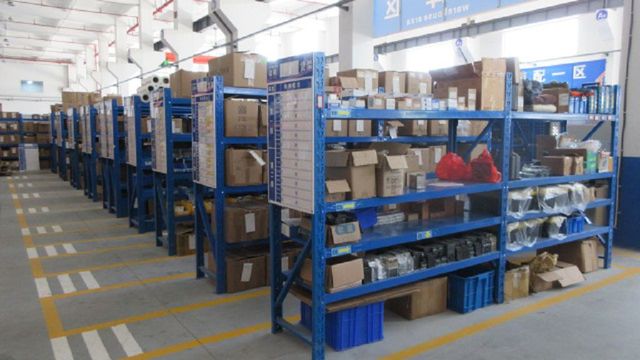
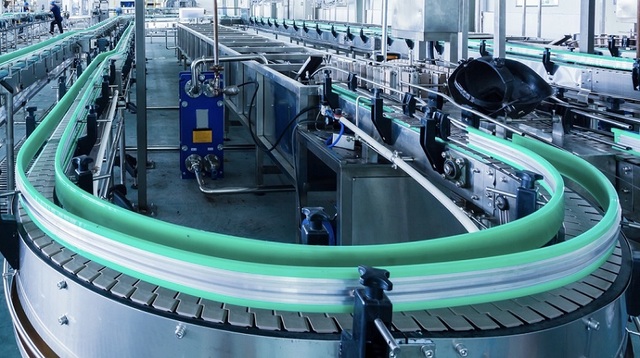
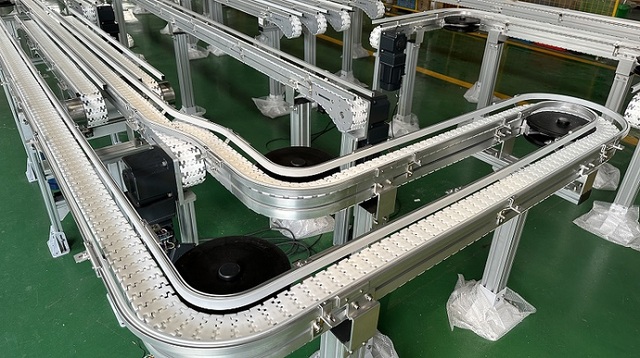
Shenzhen JK Logistics Co., Ltd. is a professional Warehouse Conveyor Systems Manufacturer specializing in material handling, sorting systems, and logistics automation solutions for modern warehouses, distribution centers, and industrial facilities. Based in Shenzhen, China, the company focuses on the development and production of intelligent automation equipment designed to improve operational efficiency, optimize material flow, and support the growing demands of global supply chains.
With extensive experience in warehouse and logistics automation, JK Logistics provides integrated solutions covering material handling systems, warehouse conveying equipment, automated sorting technologies, order fulfillment automation, pallet handling solutions, distribution center infrastructure, and smart logistics integration. These solutions are widely used in e-commerce fulfillment centers, retail distribution networks, third-party logistics operations, manufacturing facilities, and parcel processing hubs.
The company is committed to delivering reliable, scalable, and customized automation solutions that address the challenges of modern warehousing. Its engineering team collaborates closely with customers to analyze operational requirements, warehouse layouts, throughput objectives, and future expansion plans. By combining automation technology with practical logistics expertise, JK Logistics develops systems that improve productivity, reduce manual handling, enhance accuracy, and streamline warehouse operations.
Equipped with advanced manufacturing capabilities and comprehensive quality management processes, the company maintains strict standards throughout design, production, testing, and installation. Continuous investment in research and development enables JK Logistics to incorporate intelligent control technologies, data-driven automation, and flexible system integration into its solutions.
Serving customers across Asia, Europe, North America, South America, the Middle East, and other international markets, Shenzhen JK Logistics Co., Ltd. is dedicated to providing efficient warehouse conveyor systems and logistics automation solutions that help businesses improve operational performance, increase supply chain efficiency, and adapt to the evolving requirements of modern distribution and fulfillment environments.

Expanding warehouse operations across borders requires adherence to regional standards and regulations. For instance, European installations must meet the CE mark directive and EN ISO 13849-1 standards for safety-related control system components. In contrast, installations in the North American market require UL/CSA certifications for all electrical control panels and compliance with OSHA workplace guidelines.
To support overseas partners, manufacturers set up international service networks and offer localized engineering assistance. Providing remote diagnostic capabilities, spare parts kits, and structured training programs helps reduce system downtime. Furthermore, using open standard fieldbus networks (such as EtherCAT, PROFINET, or Modbus TCP) simplifies integration with local system architectures and reduces the need for specialized on-site custom programming.
Finally, as security concerns grow, industrial control systems must safeguard operational data. Modern warehouse equipment features encrypted communications protocols, secure cloud management dashboards, and localized firewalls. This dual focus on physical and data security helps safeguard proprietary inventory and fulfillment information from external interference.
 JK Logistics